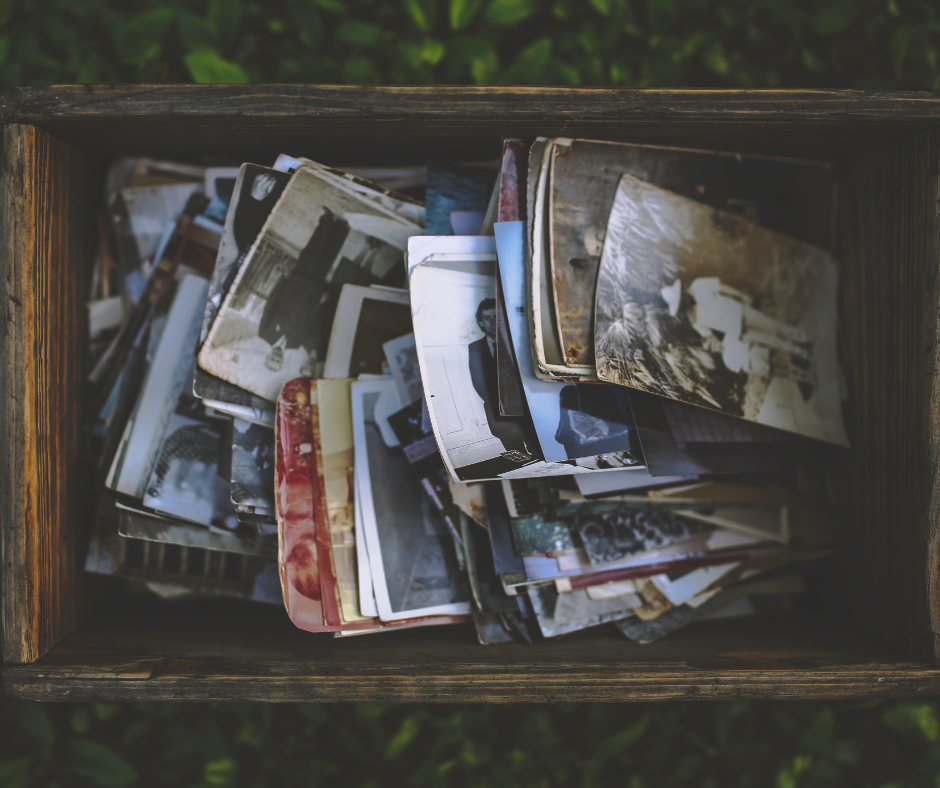
“Go and get the photo album.”
Those were the words my grandma said whenever we were hosting, and I remember we always had a special place where we kept it, ready for specific times like this. The guests would watch in anticipation, waiting—unaware that they were about to step into a photo exhibition curated over the years by my grandmother. Sometimes she didn’t even have to tell me; I’d just go get it myself because maybe I looked forward to it too—kind of like a rehearsed magic trick or a classroom show-and-tell.
We had multiple photo albums. Whenever one was full, there was always a new one waiting to be started. Some of them were big enough to house the large A3 pictures, while others were small with intricate designs.
She’d begin the tour by showing the first few pictures, introducing each and every person in the frame, the setting, and when it was taken. Some pictures had elaborate backstories with intricate details that only she knew how to explain. One thing that stood out was that even when she wasn’t around, you could still explore the photos using the guide she had written on the back—names of the people, the time, the place, the setting—everything necessary to “set the scene.” Sometimes I think there’s an art of storytelling in that simple gesture, a sign that maybe you care a little bit about the viewers of that captured moment in time.
Is writing descriptions behind photographs really a lost art?
In the age of social media and everything going digital, we can’t really do that anymore—although maybe that art has been replaced by captions. They started out as an appropriate alternative but evolved into a whole new mode of communication. What I mean is: captions are no longer an opportunity to describe your photograph; they’re now a carefully crafted way of talking about a photo without saying too much. You need context and lore to understand captions nowadays. People are opting for minimalist captions that say little but match the vibe.
The question is: do photographs even need descriptions? Or should we leave it to the viewer to formulate meaning for themselves?
There are two sides to the coin. On one hand, if you leave the description to the viewer, they have the freedom to interpret the picture and create their own meaning—which, I believe, is something some photographers want, to encourage engagement and questions. On the other hand, descriptions help give a photograph meaning and shape the narrative, essentially telling you what to think about when you look at the image. Both sides have the potential either to communicate exactly what you want people to see or to lead to misinformation—and we all know what that can do.
All I’m saying is: adding a description to your photograph is telling a story, a little gift to your viewers that guides them and shows them what you want them to see. Consider that the next time you decide to share a photograph.
(Or you could just write it behind your Polaroid pictures, lol.)